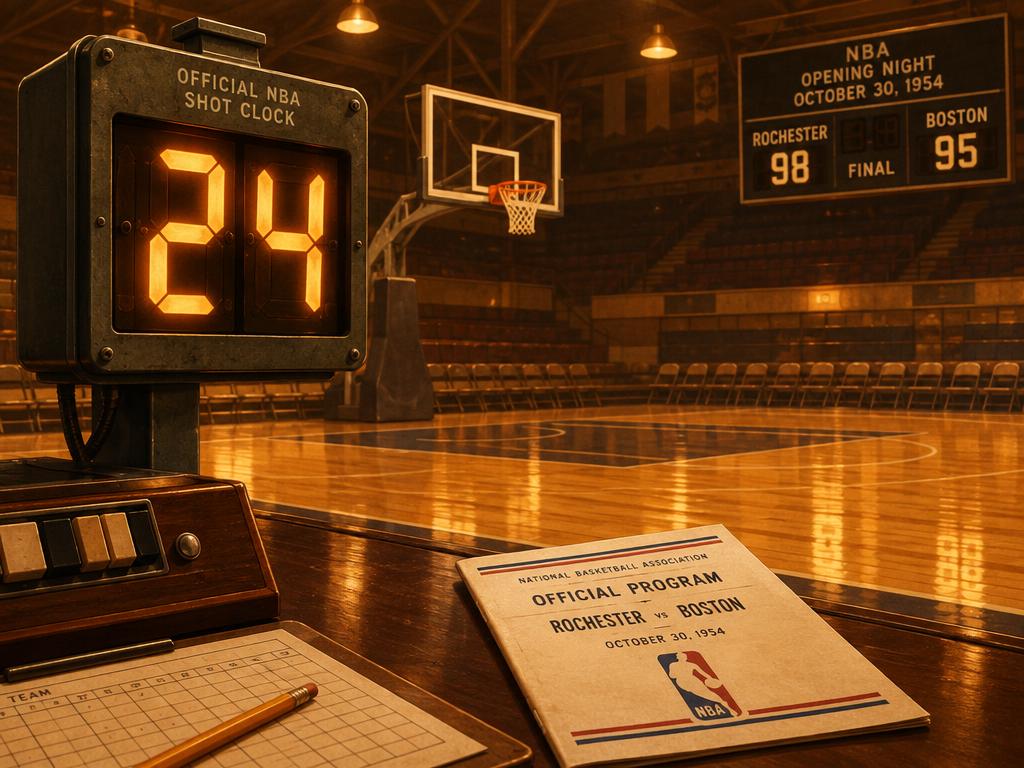
On October 30, 1954, the NBA opened a regular season with a new constraint on every possession: a team could no longer keep the ball indefinitely without attempting a shot. The 24-second shot clock made time an active part of offense, changing the choices available to teams protecting a lead.
One opening-night game ended with the Rochester Royals defeating the Boston Celtics 98–95. The lasting story was larger than that result. A countdown now accompanied each possession, requiring an attempt before the clock expired. Holding the ball ceased to be an unrestricted way to prevent the opponent from playing.
The reform addressed a practical problem. Before the clock, a team could stall for long stretches, particularly when ahead. Opponents often had to foul to regain a chance at possession. That pattern could turn a close finish into repeated free throws while reducing the opportunity for an actual attacking response.
Syracuse Nationals owner Danny Biasone and general manager Leo Ferris were central to developing the rule. The 24-second figure came from dividing the 2,880 seconds in a 48-minute game by roughly 120 combined shot attempts. It was a way to translate the rhythm of an active game into a limit that could be enforced.
The change reshaped late-game strategy as well as ordinary possessions. A defense could force time pressure, and an offense had to organize its attack around a visible deadline. Opening night in 1954 matters because that relationship became part of NBA competition. The shot clock did not identify a champion or create a single highlight; it changed the conditions under which future highlights would happen.