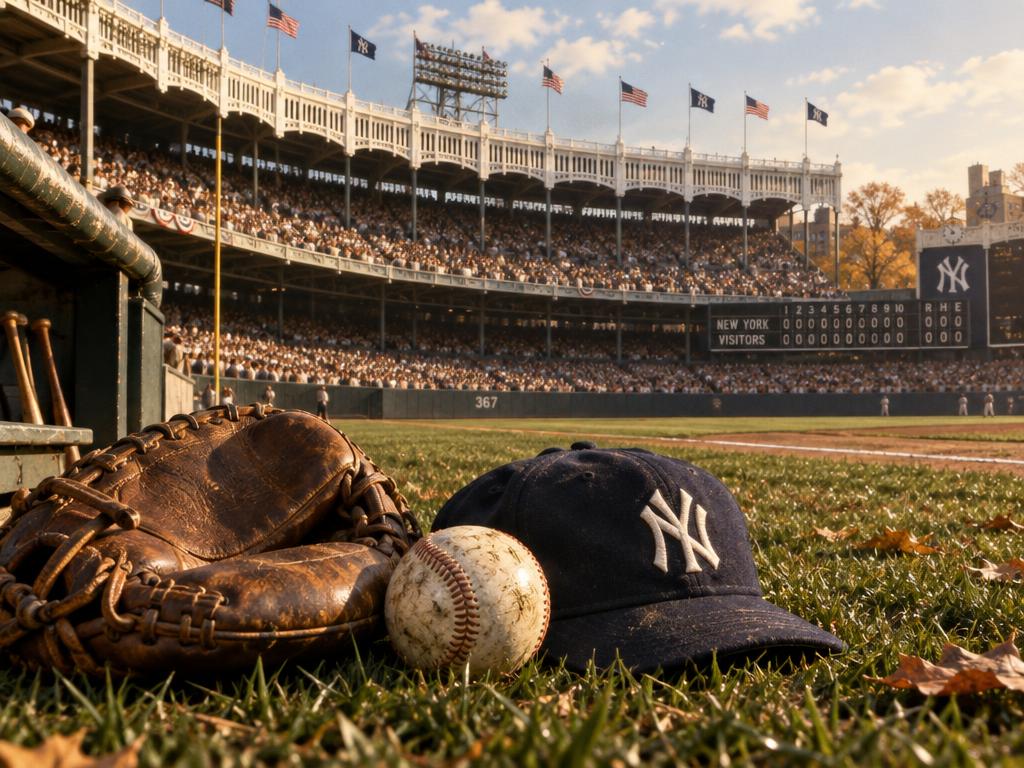
On October 8, 1956, Don Larsen turned Game 5 of the World Series into a demonstration of how little margin a pitcher needs to make history. The New York Yankees right-hander faced 27 Brooklyn Dodgers batters at Yankee Stadium. None reached base. New York won 2–0, and Larsen had completed a perfect game on baseball's biggest stage.
The afternoon did not begin with an obvious script for greatness. Larsen had struggled in Game 2, failing to get out of the second inning. With the Series tied at two games apiece, the Yankees needed a dependable start rather than a miracle. What they received was a performance in which every inning ended without a walk, a hit or a defensive mistake putting a Dodger on base.
Larsen needed 97 pitches. Mickey Mantle's fourth-inning home run supplied the first run, and New York added another in the sixth. Those small offensive contributions mattered because the game remained close enough that one bad sequence could have changed both the score and the historical achievement.
The final batter was pinch-hitter Dale Mitchell. When Larsen struck him out, catcher Yogi Berra rushed toward the mound and jumped into his pitcher's arms. That celebration became the familiar image of an accomplishment built, less visibly, on nine innings of clean execution.
A perfect game asks more of a pitcher and his defense than a no-hitter: nobody can reach base at all. Larsen satisfied that standard against a Brooklyn lineup loaded with accomplished hitters. The Yankees later won the Series in seven games, but October 8 gave the championship its defining afternoon.