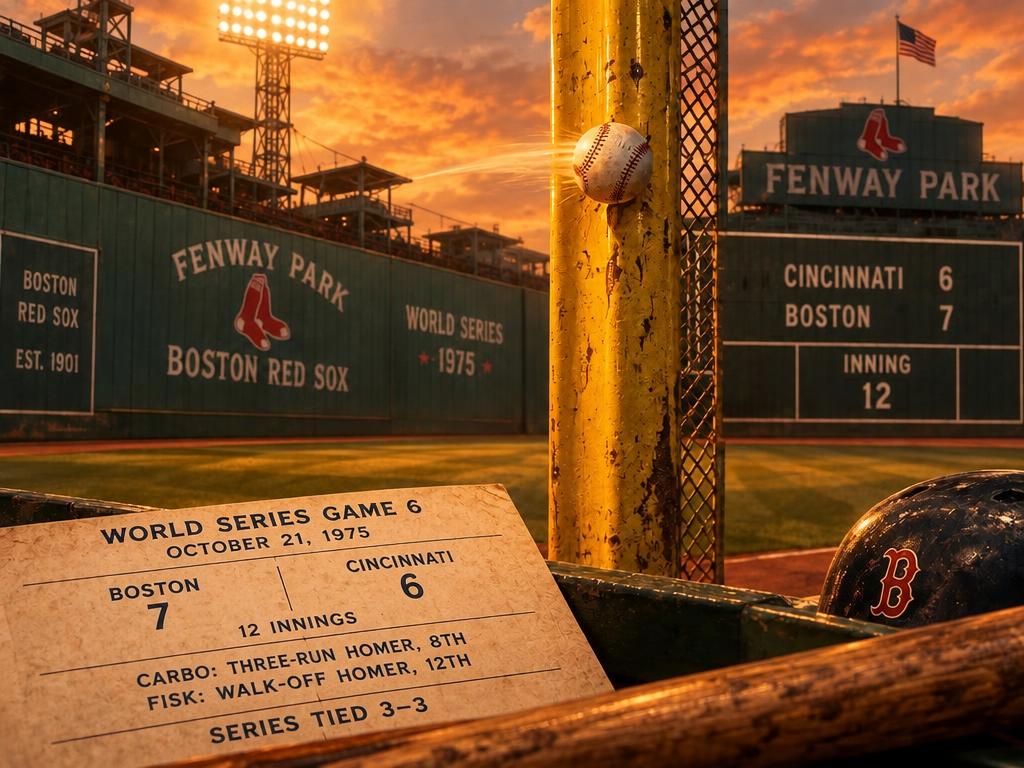
On October 21, 1975, World Series Game 6 ended with a ball striking Fenway Park's left-field foul pole. Carlton Fisk's home run in the bottom of the 12th gave the Boston Red Sox a 7–6 victory over the Cincinnati Reds. Boston had stayed alive, and the championship would require a seventh game.
The finish was famous partly because the game had already seemed to turn against Boston. Cincinnati led 6–3 in the eighth inning. With two runners aboard, pinch hitter Bernie Carbo homered to center field, bringing the score level. His swing erased the deficit and kept the Red Sox from facing elimination in the ninth.
Extra innings created another threat. In the 11th, Dwight Evans caught Joe Morgan's drive in right field and helped turn a double play. A ball that could have shifted the game toward Cincinnati instead became a defensive escape. Boston's eventual victory depended on surviving that opportunity before creating its own.
Fisk led off the 12th against Pat Darcy. After contact, he moved along the first-base line and waved toward fair territory as the ball traveled toward the pole. It stayed fair. The gesture and the flight of the ball gave the ending a visual clarity that a box score alone cannot supply.
Cincinnati won Game 7 the following night, so Fisk's homer did not decide the championship. Its importance is more specific: it extended a fiercely contested Series and completed a game built from a late rally, an exceptional defensive play and a sudden finish. Those connected moments gave Game 6 its place in World Series history, even though the pennant remained undecided until the following night.