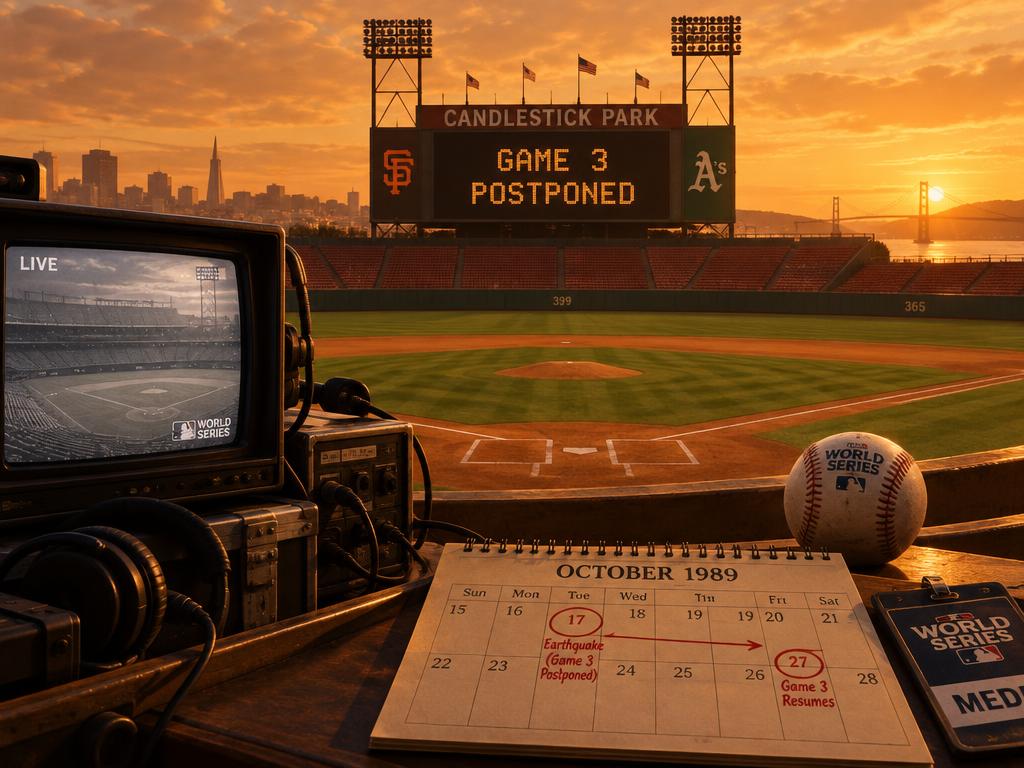
On October 17, 1989, the World Series stopped before Game 3 could begin. The San Francisco Giants and Oakland Athletics were preparing to play at Candlestick Park when the Loma Prieta earthquake struck the Bay Area. A championship being contested by two local teams suddenly became part of a regional emergency.
The interruption reached viewers who had tuned in for baseball. ABC's pregame broadcast captured the disturbance before its signal failed. Inside the ballpark, the immediate problem was no longer how the Giants could recover from a two-game deficit. Players, staff and spectators needed information about their families, the stadium and the city outside.
Game 3 was postponed. The delay required more than choosing another evening on the schedule. Transportation, power and public safety had to take precedence, while the ballpark needed to be assessed before a large crowd could return. A nationally televised sporting event could not simply proceed beside the disruption.
The Series resumed on October 27, ten days after the earthquake. Oakland won the rescheduled third game and then completed a sweep the following day. Those baseball results remain part of the record, but they do not explain why this particular World Series is remembered so distinctly.
The lasting significance lies in the pause itself. The same television audience expecting a rivalry instead witnessed the moment a sporting calendar became secondary to a community's needs. Candlestick's interrupted preparations, the missing first pitch and the ten-day gap distinguish this event from an ordinary postponement. The championship eventually had a winner; the interruption had already changed its meaning.