Changing the voice in the headset does not change Houston’s defense by itself. DeMeco Ryans’ takeover of play-calling matters only if it changes what defenders hear before the snap: the front, the pressure picture, and the coverage rule behind it. The first test is not whether Houston looks more aggressive. It is whether it plays faster and more connected.
The change follows a sharp reversal. Houston finished last season first in scoring defense and second in yards allowed; through four games this year, it ranks 26th in points allowed and 20th in yards. Matt Burke had called the defense since early last season. Now Ryans says communication is his responsibility, and he is taking the call sheet back. That is accountability, but it is also a practical adjustment: one voice can reduce the distance between the sideline’s plan and the players’ checks.
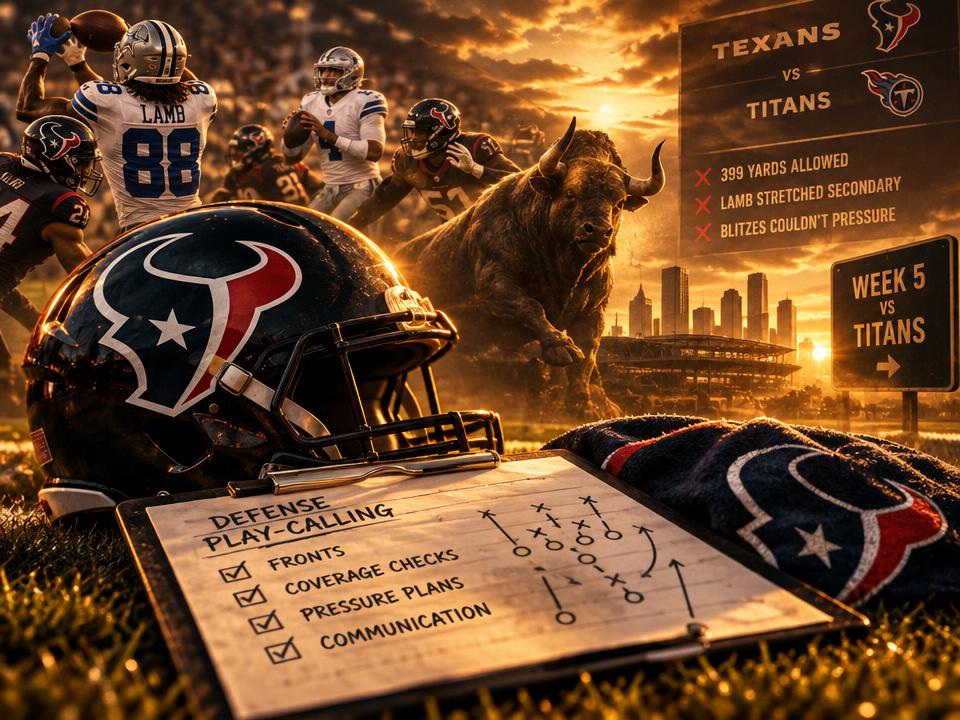
Start with the Cowboys game, not the standings. Dallas totaled 399 yards, just two more than Houston, but turned its best late possessions into points. CeeDee Lamb caught 17 passes for 189 yards, moving across formations and forcing the secondary to identify him repeatedly. Houston’s issue was not simply that Lamb won one matchup. The defense needed a dependable answer for where the help came from and who carried the route when the formation changed.
The pressure plan also needs a sharper read. Dak Prescott completed five of seven passes for 116 yards against the blitz, and Houston pressured him only once on those blitzes. That is the warning light: adding rushers without changing the quarterback’s picture can remove a defender from coverage and still leave the passer comfortable. Ryans can alter the order of the rush, disguise the rotation, or call a simulated pressure that keeps bodies underneath. But if the rush arrives late and the coverage rules remain unclear, the disguise only adds another assignment for a defense already struggling to communicate.
The finish against Dallas shows the stakes. Houston reclaimed a 30-27 lead with 2:23 left, then allowed the Cowboys to answer with the go-ahead touchdown. Dallas had already moved Lamb around to create different looks; the Texans still could not keep the final coverage sound. A new playcaller can set the leverage and help rules earlier. He cannot make a corner avoid a flag or guarantee a tackle. Houston was penalized 13 times, its most in the Ryans era, another sign that the breakdowns are not all solved by changing who speaks into the headset.
There is a tradeoff, too. A head coach calling defense must still manage the game, the offense, and the sideline. Ryans previously handed off defensive calls to Burke; taking them back can tighten the chain of command, but it puts more decisions on one coach. The answer is not to invent a new defense in four days. It is to trim the menu: fewer late checks, clearer leverage rules, and pressure calls tied to a specific coverage answer.
Sunday’s visit to Tennessee is a useful first test, not a verdict. The Titans are also 0-4, so Houston should have chances to dictate the terms. Watch the safeties: do they rotate with purpose before the snap? Watch the rush: does pressure arrive without exposing easy throws underneath? And watch whether the defense gets lined up without burning timeouts or surrendering free yards to penalties.
If those details improve, Ryans’ return to the call sheet will have fixed something real: the path from the plan to the player. If Houston merely blitzes more and still gives receivers clean windows, then the problem was never the headset. The defense needs better answers—and cleaner execution—on the same snap.