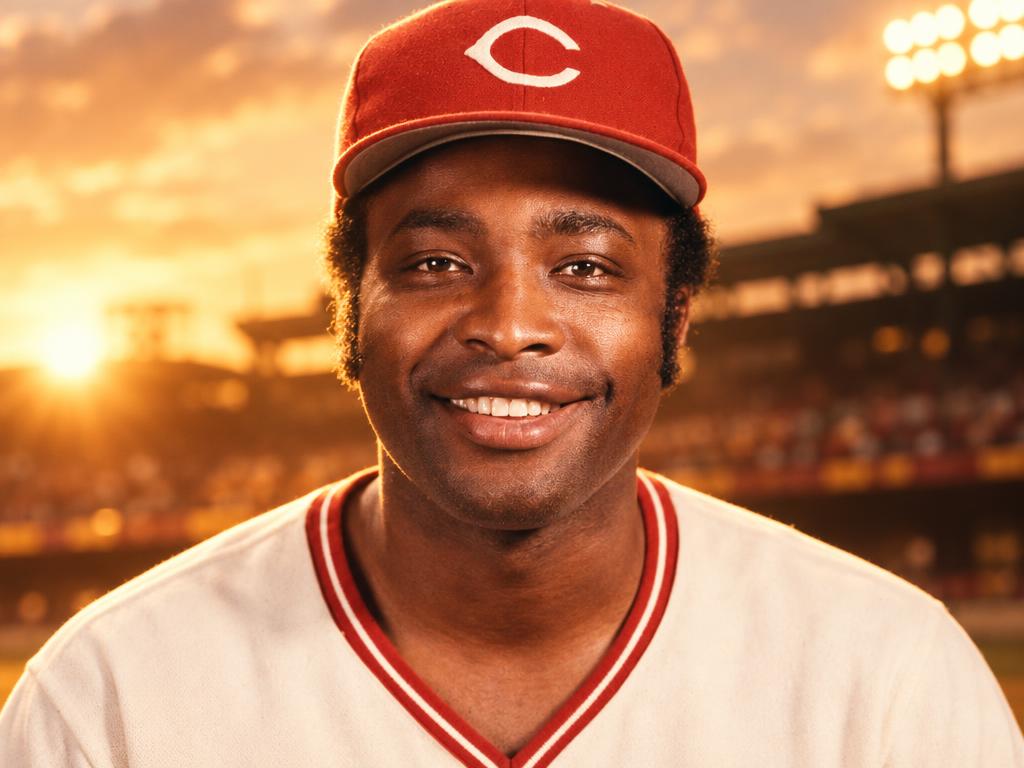
Joe Morgan showed how many parts of baseball a second baseman could influence. He reached base patiently, supplied power, ran aggressively and defended a demanding position. With the Cincinnati Reds, those skills became central to the Big Red Machine's championship seasons, making him one of the most complete players of his era.
Born on September 19, 1943, in Bonham, Texas, Morgan grew up in Oakland, California. He signed with Houston and reached the majors in 1963. The early years established his ability, but a trade to Cincinnati in November 1971 placed him in an offense where his strengths could help drive a much larger team achievement.
Morgan was not simply another hitter in a powerful lineup. His willingness to take walks made pitchers work, and his speed could change what happened after he reached first base. That combination created opportunities for teammates while forcing opponents to pay attention to the runner as well as the batter.
He won the National League MVP award in both 1975 and 1976, the same seasons Cincinnati won consecutive World Series. Five straight Gold Glove awards from 1973 through 1977 recognized the defensive side of a game that was never confined to batting.
In the ninth inning of Game 7 of the 1975 World Series, Morgan's single drove in the run that put Cincinnati ahead of Boston. The Reds won 4–3. It was a decisive moment that matched his broader role: doing the useful thing a championship offense needed, whether through patience, contact or movement on the bases.
His career continued beyond Cincinnati, including stops with Houston, San Francisco, Philadelphia and Oakland. He finished with 2,517 hits, 268 home runs, 1,865 walks and 689 stolen bases. After retiring, he became a familiar national voice as a broadcaster.
Morgan entered the Baseball Hall of Fame in 1990 and died on October 11, 2020, at 77. His legacy offers a complete picture of offensive value, where getting on base and making intelligent decisions can be as important as a dramatic swing.