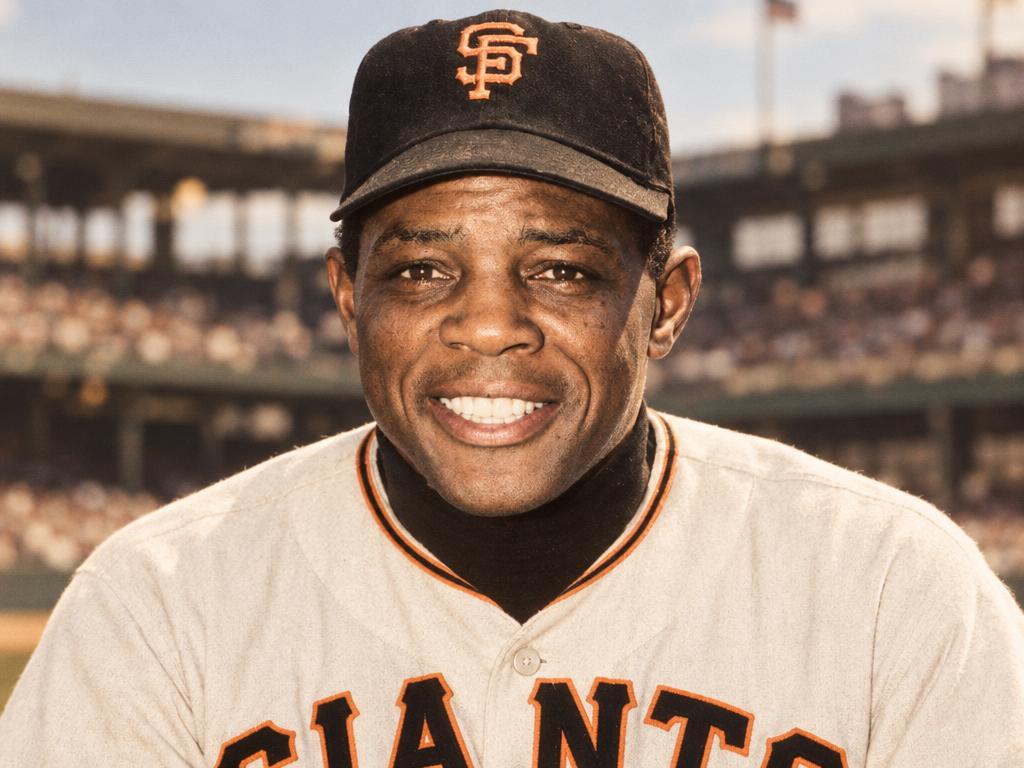
Willie Mays made the idea of a complete ballplayer easy to understand. A pitcher could not dismiss his power, a catcher could not ignore his speed, and a hitter sending the ball toward center field could not assume it would land. The same player who could change an inning with his bat could erase one with his glove.
Born in Westfield, Alabama, in 1931, Mays began his professional career with the Birmingham Black Barons before reaching the New York Giants in 1951. His early major-league struggles gave way to a Rookie of the Year season. Military service interrupted his rise, but his return in 1954 brought an MVP award, a batting title and a championship.
That World Series supplied the play most closely attached to his name. At the Polo Grounds, Mays chased Vic Wertz's long drive with his back to the infield and caught it over his shoulder. The catch was only half the work. His quick turn and throw helped prevent the runners from turning a spectacular defensive moment into a damaging advance.
Mays followed the Giants west to San Francisco and remained their central figure through changing ballparks, teammates and generations of opponents. A second MVP award in 1965 showed that his greatness was not confined to a youthful burst. Even as the seasons accumulated, his game continued to offer several ways to win.
The appeal was more than versatility. Mays played with an energy that made difficult baseball look inviting: the running catch, the aggressive turn around a base, the swing that demanded a deep outfield. His performance gave fans an immediate reason to watch and teammates a standard that extended beyond any single skill.
He finished his playing career with the New York Mets and entered the Baseball Hall of Fame in 1979. Mays died in 2024, leaving a legacy rooted in the whole game. The famous catch remains an entry point, but his lasting distinction is how many different parts of baseball he could command.