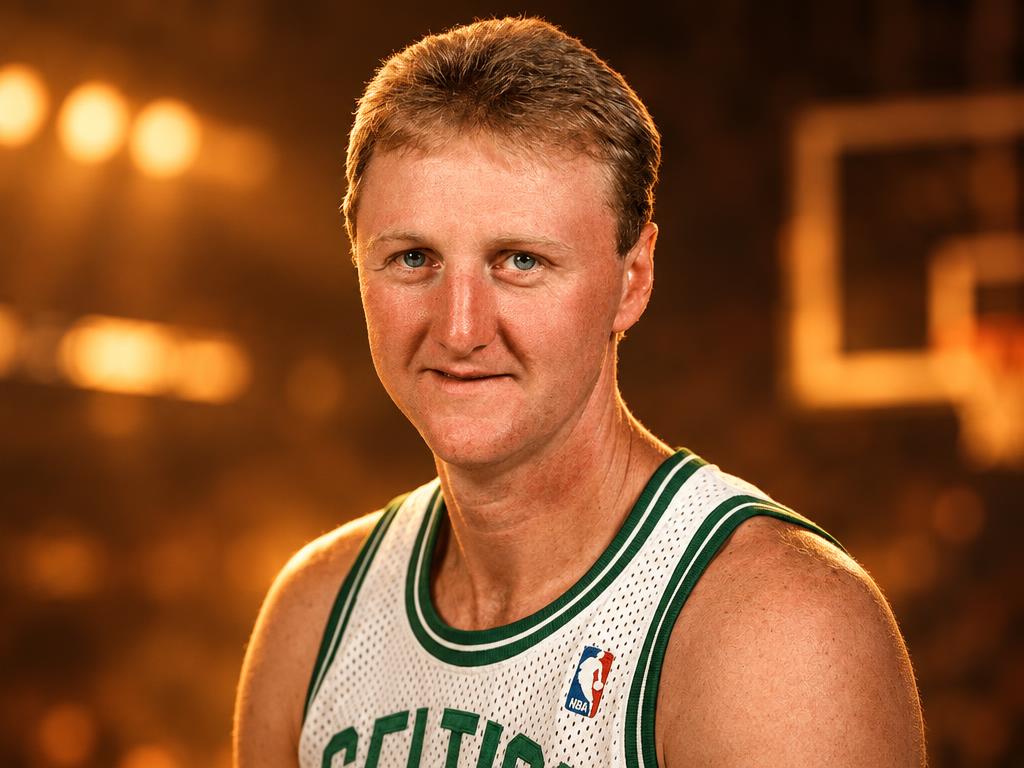
Larry Bird could make a possession belong to him without being the fastest player on the floor. He found the open teammate before the defense finished rotating, recognized where a rebound would fall, and turned a difficult shot into a decision he was comfortable making. His game rewarded attention as much as athletic spectacle.
Born in West Baden, Indiana, in 1956 and raised in nearby French Lick, Bird became a national figure at Indiana State. His meeting with Magic Johnson's Michigan State team in the 1979 NCAA championship game introduced a rivalry that soon moved to the NBA. The Boston Celtics had already drafted Bird, and his arrival that fall gave a struggling franchise a new organizing force.
Boston won championships in 1981, 1984 and 1986. Bird was essential to teams whose strength came from several players working together, not from one star monopolizing every possession. His passing made interior players more dangerous, his shooting punished loose coverage, and his willingness to chase a loose ball set expectations for everyone beside him.
Three consecutive MVP awards, from 1984 through 1986, marked his sustained command of the league. The Celtics' clashes with Johnson's Los Angeles Lakers gave that excellence a larger stage. Their contrast was easy to advertise, but Bird's appeal was specific: he seemed to understand what a game required before the next action began.
He also gave pressure a recognizable personality. Bird's confidence was matched by the skill to attempt the pass, take the shot or anticipate the play that others might hesitate to try. That combination made late-game situations feel like an extension of his ordinary work rather than a separate performance.
Back problems eventually limited his career, and he retired in 1992 after spending every NBA season with Boston. His Hall of Fame induction followed in 1998. Bird's legacy lives in the complete possession: create an advantage, make a teammate useful, finish the play and be ready to compete again. The famous shots are remembered because an entire basketball mind stood behind them.