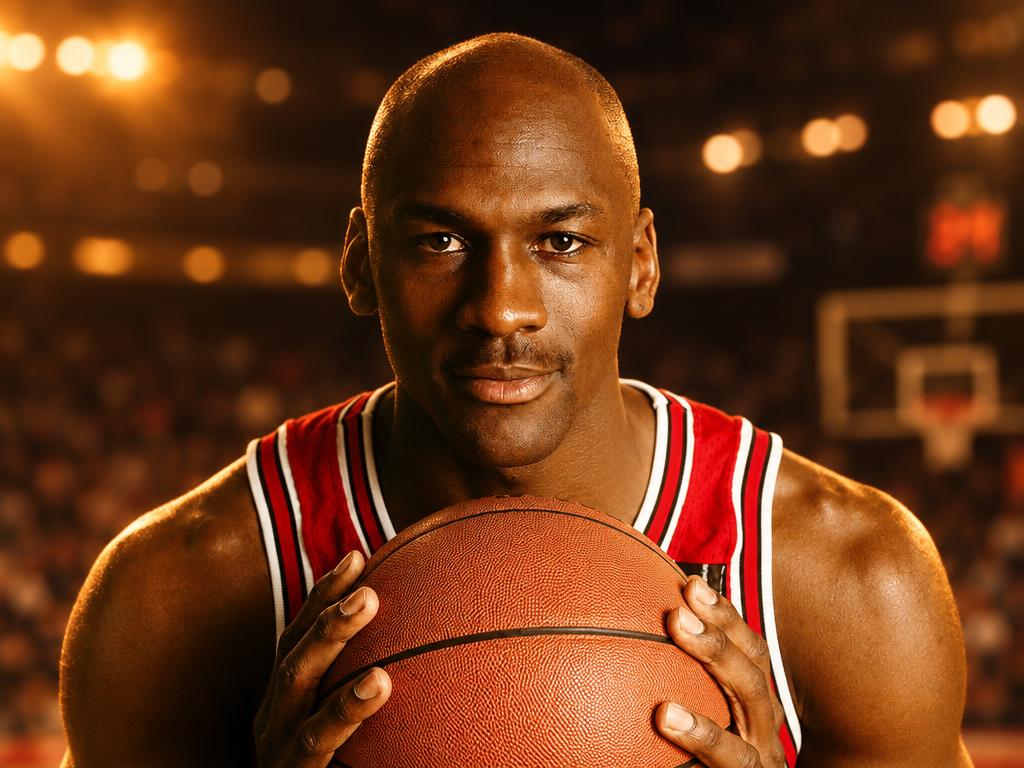
Michael Jeffrey Jordan made basketball feel larger than the court. His soaring finishes, precise footwork and relentless competitive drive turned Chicago Bulls games into must-see events. He could dominate a possession with a jump shot, a steal or a decisive defensive play. Across his career, that combination of skill and intensity became a standard against which later generations of NBA stars would be measured.
Born on February 17, 1963, in Brooklyn, New York, Jordan grew up in Wilmington, North Carolina. At the University of North Carolina, he announced himself nationally by making the winning shot in the 1982 NCAA championship game. Chicago selected him third overall in the 1984 NBA Draft. The young guard quickly became the centerpiece of a franchise that would soon transform professional basketball.
Jordan's game offered more than spectacular highlights. His scoring came from explosive drives, an increasingly polished midrange attack and the ability to create space under pressure. On defense, he brought quick hands and the determination to challenge opposing guards. His repeated selections to the NBA All-Defensive First Team reflected a player whose reputation rested on both ends of the floor, not simply on how many points he scored.
Chicago's breakthrough arrived in 1991. The Bulls won three consecutive championships, establishing Jordan as the leading figure in a new NBA dynasty. After stepping away from basketball in 1993 to pursue baseball, he returned in 1995. A second run of three straight titles followed. His six Finals MVP awards captured the consistency of his influence when the championship was at stake.
Jordan also helped basketball reach audiences far beyond the United States. His place on the 1992 Olympic Dream Team connected his NBA success with a defining moment in the sport's international growth. Away from competition, Air Jordan shoes helped make an athlete's identity part of everyday fashion. The connection between performance, personality and personal brand became one of the most enduring features of his legacy.
His final NBA chapter came with the Washington Wizards from 2001 through 2003, showing that his competitive appetite survived his Chicago years. Jordan entered the Naismith Basketball Hall of Fame in 2009. His career remains a reference point for scoring excellence, defensive commitment and championship achievement, while his cultural presence continues to reach people who never saw him play.