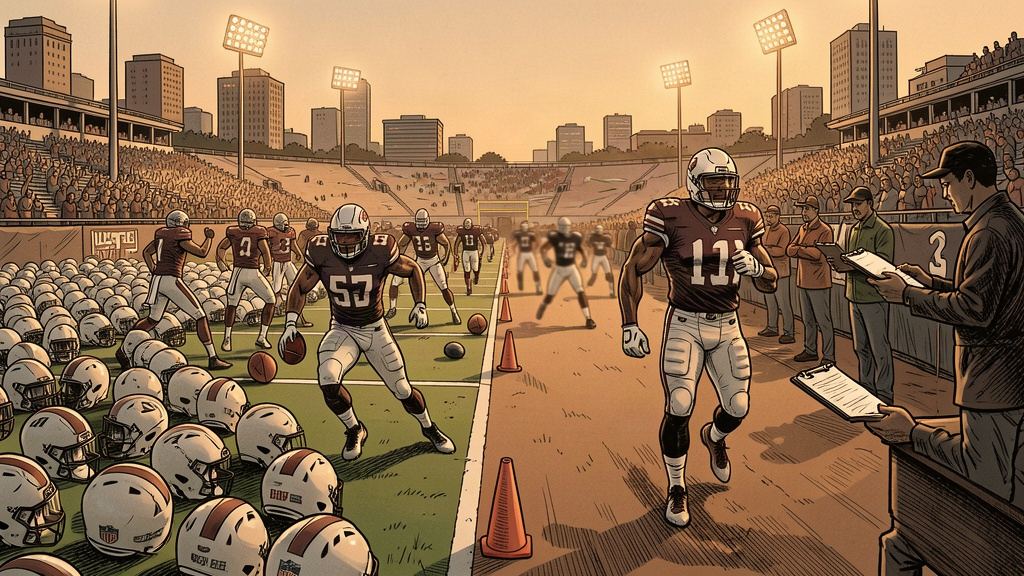
Training camp has officially moved from postcard season to evaluation season. The NFL’s Back Together Weekend on August 1-2 gave all 32 teams a national stage, but the real story was not the fan festivals, mic’d-up moments, or optimism flooding every practice field. It was the beginning of the league’s most important sorting process: figuring out which players can survive the jump from summer roster to regular-season role.
That distinction matters because every team enters camp with more players than it can keep. Early practices are full of polished clips and one-on-one highlights, but roster decisions are built on repetition, versatility, communication, and reliability. A receiver who makes one spectacular catch gets attention. A receiver who consistently wins releases, blocks correctly, understands adjustments, and avoids mental errors earns trust. Back Together Weekend was the first broad reminder that camp hype is easy to create and much harder to sustain.
The timing also raises the pressure. The Hall of Fame Game between Arizona and Carolina is scheduled for August 6, while the first preseason weekend begins August 13-15. That leaves coaches with a short runway to move from installation to real game preparation. The practices held this weekend were not preseason games, but they helped establish which competitions deserve more snaps once the lights come on.
The biggest impact may be felt by teams with unsettled depth charts. Quarterback battles get the headlines, but the more important questions often sit at wide receiver, cornerback, offensive line, linebacker, and safety. Those positions demand constant rotation, and a team’s depth can determine whether a promising season survives injuries and fatigue. The difference between a playoff roster and a middle-of-the-pack roster is often not its best 11 players. It is the quality of players 25 through 53.
- Can a young defender contribute on special teams while learning the defense?
- Can a backup offensive lineman handle multiple spots without becoming a liability?
- Can a veteran hold off a cheaper, more explosive challenger?
- Can a role player make enough impact to justify keeping him over a higher-upside prospect?
Those are the questions that matter far more than who “won” a single practice. They also explain why the league’s growing joint-practice trend is significant. Twenty-eight clubs have scheduled joint practices in 2026, with those sessions beginning August 11. That environment usually creates more competitive pressure than an ordinary camp period because players face unfamiliar opponents, different techniques, and fewer comfortable matchups. The teams that emerge with clear answers will enter preseason games with a sharper plan.
So the meaningful takeaway from Back Together Weekend is simple: the NFL season did not truly return because fans saw helmets on television. It returned because roster uncertainty became measurable. Every rep from here forward carries more weight, and the teams that turn camp competition into dependable depth will gain an advantage long before Week 1.