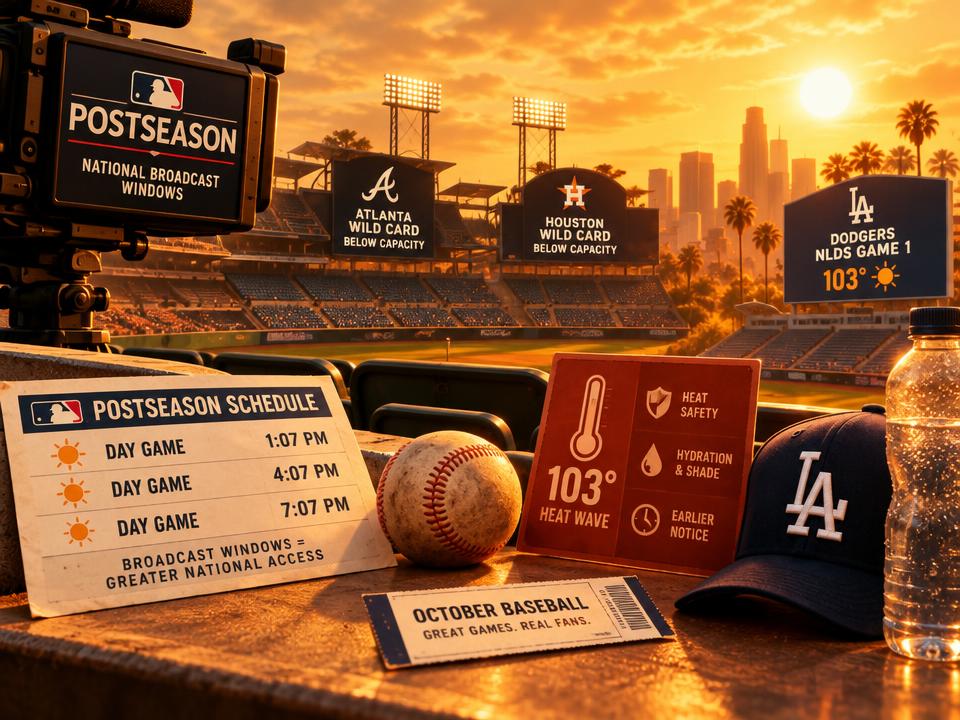
The postseason should feel like baseball at maximum volume. This October, MLB’s schedule has instead exposed a problem at the gates: the league’s effort to carve playoff games into separate television windows can leave fans with weekday workday starts—and, in Los Angeles, triple-digit heat. Those are different problems, but both trace back to the same choice: treating first pitch as a broadcast slot before treating it as a live event.
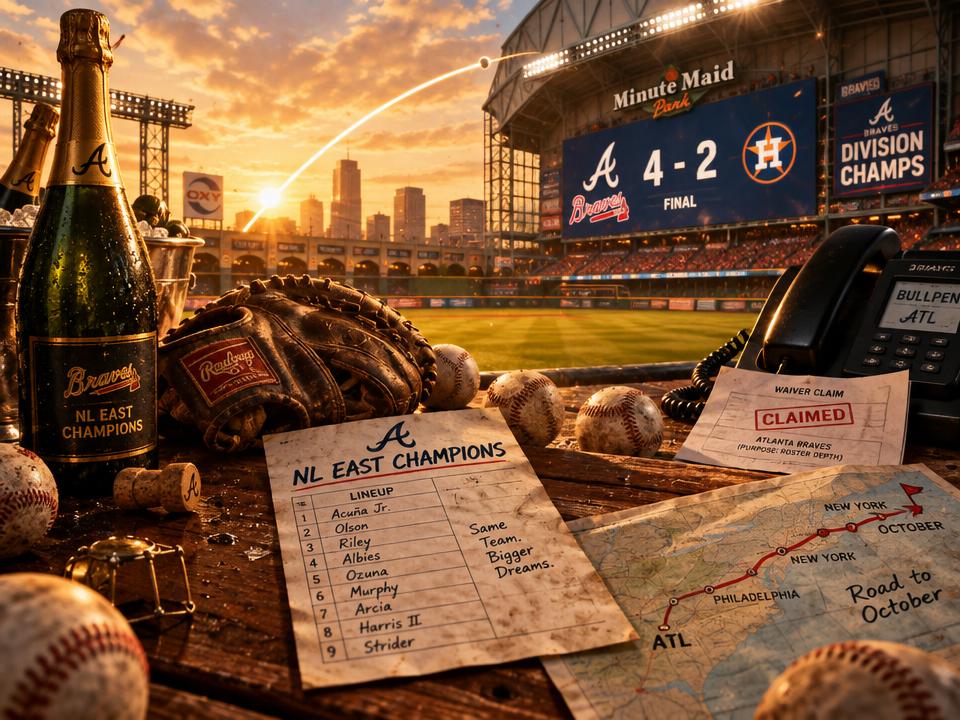
Atlanta and Houston made the attendance cost measurable. The Braves drew 30,127 for a 2 p.m. opener in a 41,108-seat park; Houston announced 34,011 for its 4 p.m. game in a 41,168-seat ballpark. Since the 12-team format arrived in 2022, only six of 26 afternoon Wild Card games had reached capacity through this year’s opening games; seven failed to reach 85 percent. This is not proof fans care less. Weekday starts, announced just days ahead, collide with jobs, school, and travel.
Los Angeles turned that friction into a safety question. The Dodgers’ Oct. 3 NLDS opener began at 100 degrees and reached 103 by the third inning, under an extreme heat warning. The Los Angeles Times reported fans sought medical attention, a stadium attendant was stretchered out before the game, and some seats were too hot to occupy. MLB and its broadcast partners had set the early start before the matchup was known. A premium event cannot treat those conditions as a footnote.
There is real business logic behind the windows. MLB spreads games across the day so each can command its own national TV audience; NBC’s postseason package is reportedly worth about $200 million annually. Putting every game in one evening slot would create scheduling collisions and risk later finishes. The league is not choosing between fans and television in a vacuum. It is choosing which fan it optimizes for—and right now, the viewer at home has the easier deal.
That choice has consequences beyond attendance totals. Empty sections thin the home-field sound, diminish the event for fans who did make the trip, and make a playoff game look smaller than its stakes. Heat adds a second penalty for spectators and umpires wearing protective gear, while also changing playing conditions. In Los Angeles, five homers produced all eight runs; the Times reported hot, dense air reduced drag. One game cannot tell us how much weather shaped those swings, but it shows scheduling conditions are part of the contest, not just its backdrop.
MLB can preserve separate TV windows while adding clear safeguards: a heat-triggered flex option, an alternate start time disclosed in advance, and earlier notice for fans as soon as the bracket allows. A move need not be automatic; it should have a published threshold. Track attendance and heat-related incidents in postseason reviews alongside ratings. That would let the league protect television value without pretending every local cost is unavoidable.
The Dodgers and Braves split the first two games, and the series moves to Atlanta. The baseball can take over from there. But a packed, safe stadium is part of the postseason product, too. The measure of October should not be only how many people can watch, but whether the people in those cities can reasonably be there.